What turns a branded gathering into an experience guests want to take part in, rather than simply attend? It takes more than a striking backdrop or polished product display. If you’re asking “what is a brand activation event,” it’s an experience designed to bring a brand to life through purposeful guest participation, creating a connection that can continue beyond the event.
That distinction matters when you’re turning a marketing goal into a guest experience. A successful activation gives people a clear way to engage, while the creative and logistical choices support a measurable objective. This guide explains what sets brand activations apart, how to shape one around your audience and goals, and which results to track afterward. You’ll also find practical criteria for comparing Los Angeles venues, from fit with the experience format to details you’ll need to confirm. The Vermont Hollywood is a renovated historic cinema space with 13,000 square feet available for brand activations and corporate events.
Key Takeaways
- When asking what is a brand activation event, look for purposeful audience participation, not just prominent branding.
- Shape the guest journey so the setting, activity, staffing, and communications express one consistent brand story.
- Choose a small set of success measures that directly connect to your activation’s objectives.
- Compare Los Angeles venues by event format, guest flow, production needs, access, and brand fit, then confirm practical details directly.
What Is a Brand Activation Event, and What Makes It Different?
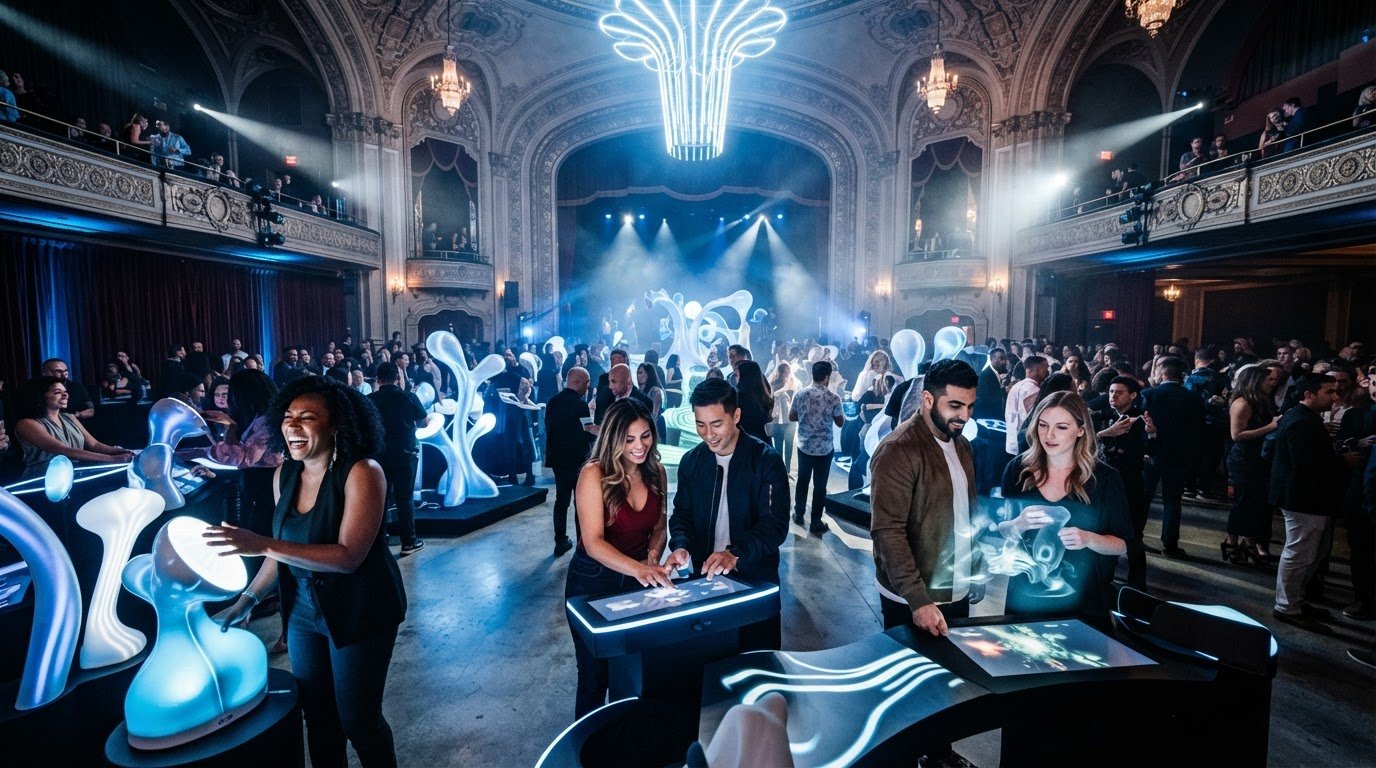
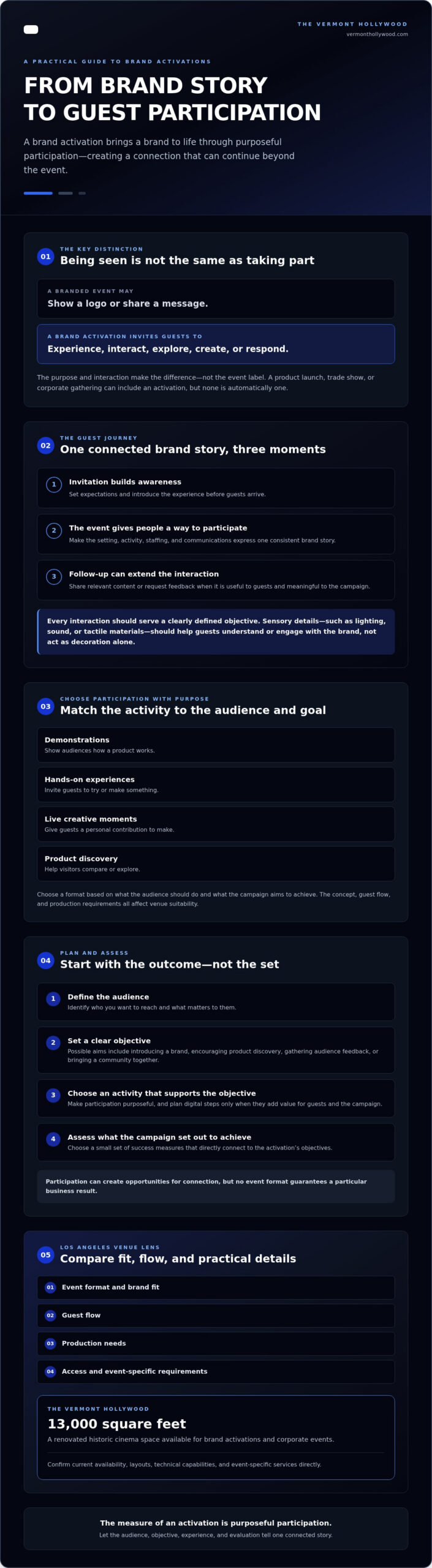
So, what is a brand activation event? It’s an event designed to let people experience and interact with a brand, rather than simply see its logo or hear its message. Participation gives the experience purpose: guests might try a product, contribute to an installation, share feedback, or respond to a digital prompt. Marketing activation is a broader discipline, while brand activation focuses on building a meaningful connection between a brand and its audience.
A product launch, trade show, or corporate gathering can include an activation, but none is automatically one. A launch becomes participatory when guests can explore or test what’s new. A trade show booth can invite visitors to complete an activity, and a company event can bring brand values to life through an experience. The distinction is the purpose and interaction, not the event label.
Branded décor puts a brand in the room; a brand activation invites people to take part in its story.
How does a brand activation differ from a regular marketing event?
At a conventional marketing event, people may attend, watch a presentation, and leave with information. An activation gives them a reason to engage, explore, create, or respond. Interaction can happen in person, digitally, or across both channels. For example, a fictional skincare brand might invite guests to try product textures at an event, then use a QR code to share preferences online. On a larger scale, entertainment brands immerse audiences directly into their story worlds; to see how film IP translates into physical, participatory attractions, visit Columbia Pictures Aquaverse.
What can a brand activation help a business achieve?
The right objective depends on the campaign. An activation might introduce a brand to new audiences, encourage product discovery, gather audience feedback, or bring a community together around shared interests. Choose the intended outcome before settling on an activity, then check that the experience supports it. Participation can create opportunities for connection, but no event format guarantees a particular business result.
How Brand Activation Events Turn a Brand Story into Audience Participation
A strong activation carries one brand story through the guest journey: an invitation builds awareness, the event gives people a way to participate, and follow-up can extend the interaction beyond the room. Afterward, assess whether the experience delivered what the campaign set out to achieve. Each stage should feel connected, rather than like a series of separate promotional messages.
Meaningful participation turns a brand story into an experience when every interaction serves a clearly defined objective. That principle should guide the setting, activity, staff instructions, and event communications. Sensory elements such as lighting, sound, or tactile materials can add to the experience, but they should help guests understand or engage with the brand, not act as decoration alone. For practical guidance on aligning event design with goals and evaluation, see how industry specialists plan brand activation events.
Which activation formats can encourage meaningful interaction?
Demonstrations can show audiences how a product works. Hands-on experiences invite them to try or make something, while live creative moments give guests a personal contribution. Product discovery activities can help visitors compare or explore. Match the format to what the audience should do and what the campaign aims to achieve. Venue suitability depends on the concept, guest flow, and production requirements, so confirm the fit during planning. For teams organizing events in New York, learn more about Glasshouse Downtown to see how a purpose-built venue can support dynamic formats and production needs.
How should the event connect with digital channels?
Plan invitations, event content, and follow-up as parts of one journey. A digital invitation can set expectations, while a QR code or social prompt can extend participation on-site if it supports the objective. After the event, follow up with relevant content or a feedback request. Don’t add digital steps just to collect activity. Make each one useful to the guest and meaningful to the campaign.
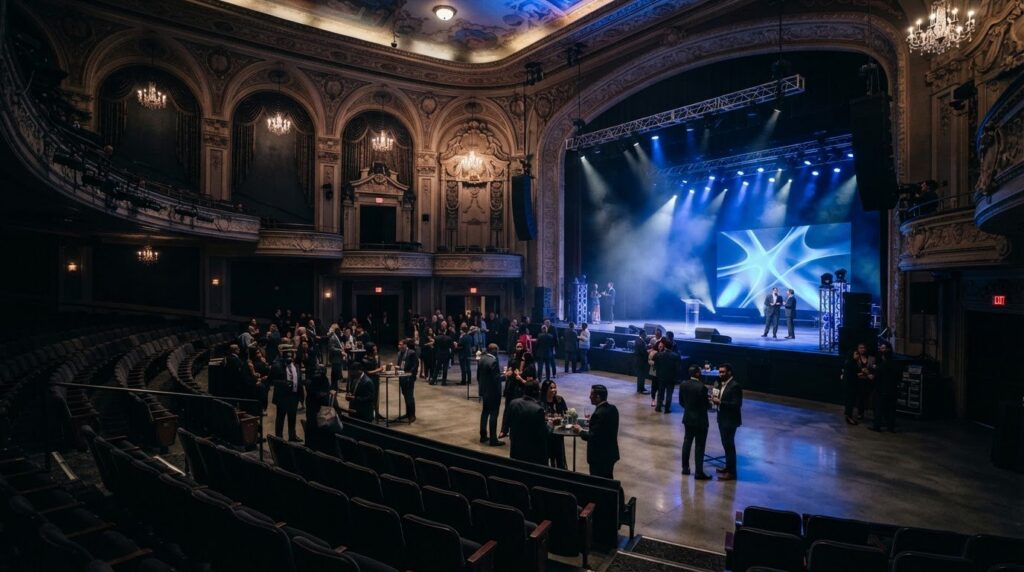
For an in-person concept, The Vermont Hollywood offers a 13,000-square-foot multipurpose space for brand activations. Explore The Vermont Hollywood brand activation space as one venue option, and confirm current availability, layouts, technical capabilities, and event-specific services directly.
How to Plan a Brand Activation Event and Measure Its Impact
Before choosing a venue or building a dramatic set, decide what the activation needs to accomplish. For your campaign, answering “what is a brand activation event” means connecting the experience to a specific audience, action, and outcome, then deciding how to assess it.
- Define the audience. Identify who you want to reach and what matters to them.
- Set objectives. Choose a clear goal, such as product discovery, audience feedback, or qualified leads.
- Design participation. Create an activity that helps guests take an action aligned with that goal.
- Plan operations. Assign responsibilities and confirm venue, staffing, accessibility, guest flow, production, and contingency needs.
- Evaluate results. Compare a small set of preselected measures with your objective and baseline.
What should an activation event brief include?
Document the audience, key brand message, desired guest action, event format, team responsibilities, and operational requirements. Map the guest journey from arrival to departure, and consider how content will be captured and whether the experience is accessible and easy to follow. Confirm applicable permits, insurance, and production requirements with the venue and appropriate professionals rather than assuming they’re covered.
How can marketers evaluate whether an activation worked?
Set a baseline and define success measures before the event, not after seeing the results. Attendance counts visitors; participation records who completed an activity; qualified leads reflect contacts that meet campaign criteria; feedback captures audience responses; and post-event engagement tracks relevant follow-up interactions. Select only measures tied to your objective. A visually impressive event may attract attention, but spectacle alone doesn’t show whether guests engaged or took the intended next step. Interpret results in context and allow time for planned follow-up.
Planning an in-person activation in Los Angeles? Explore The Vermont Hollywood brand activation space as one venue option, and confirm current availability and event-specific details directly.
Choosing a Los Angeles Venue for a Brand Activation Event
The right venue should support the experience you’ve designed, not force it into a format that doesn’t fit. As you compare Los Angeles spaces, consider how the event format, guest flow, production needs, guest and vendor access, and brand fit work together. A space suited to product discovery may not be the best match for a live demonstration or an installation guests move through.
Use this framework to guide your comparison:
- Format and brand fit: Can the space support the planned activity and reflect the character of the brand?
- Guest flow: Can attendees move naturally between arrival, interaction, and departure?
- Production and access: Ask how the space accommodates your production plan and guest and vendor access.
For a broader comparison of event spaces, consult this Los Angeles private event venue guide.
What should you ask a Los Angeles activation venue?
Ask about available layouts, production capabilities, access arrangements, staffing, event restrictions, and which services are included. Confirm capacity, equipment, current availability, and technical details directly with each venue. Don’t assume a venue’s category or promotional materials confirm the specifications your activation requires. Share your planned activity and guest flow with the venue so you can check whether the space and its confirmed capabilities fit.
When might The Vermont Hollywood suit a brand activation?
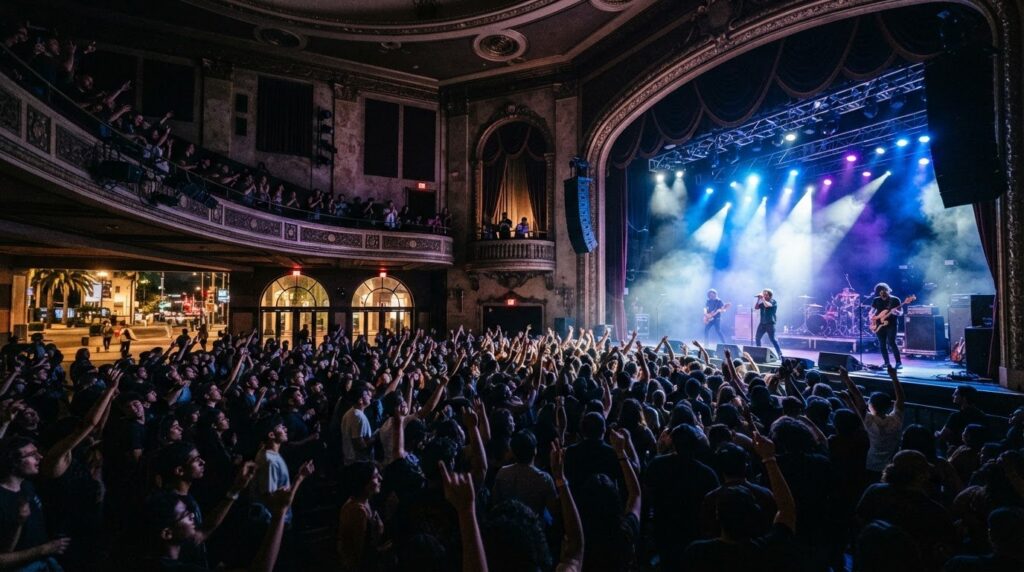
The Vermont Hollywood is a Los Angeles live-entertainment destination with a 13,000-square-foot multipurpose space available for brand activations. The historic cinema reopened as a multipurpose venue in 2021. Its scale and multipurpose setting may suit concepts that need room for an in-person brand experience, subject to confirming the event’s specific requirements. If your concept includes live entertainment, explore the Los Angeles concert experience as a reference point.
Once your format and requirements are clear, explore venue information or inquire about hosting your event at The Vermont Hollywood.
Bring Your Brand Story to Life
Understanding what is a brand activation event starts with one distinction: guests do more than see a brand; they have a purposeful way to engage with it. Strong concepts align that participation with a clear audience and business objective, then use focused measures to assess what happened beyond attendance or visual spectacle.
Venue choice helps shape the experience. Consider whether the space supports your format, guest flow, production needs, and brand identity. Confirm capacity, layouts, equipment, availability, and included services directly. In Los Angeles, The Vermont Hollywood offers a 13,000-square-foot multipurpose space available for brand activations. Its historic cinema reopened as a multipurpose venue in 2021, making it a setting to consider for an in-person experience.
Explore The Vermont Hollywood as a Los Angeles brand activation venue and ask about hosting your event. With a clear purpose and a setting suited to the experience, you can give guests a memorable way to connect with your brand.
Frequently Asked Questions
What is a brand activation event?
A brand activation event invites an audience to experience or interact with a brand through a purposeful activity, demonstration, or live experience. Its defining feature is participation, not simply a logo on event materials. The activity should connect to a clear audience and business objective. For example, guests might try a product and share feedback that helps the brand understand their experience.
What is the difference between a brand activation and a brand event?
A brand event can be any gathering organized or sponsored by a brand. A brand activation places particular emphasis on audience interaction or experience. The terms can overlap: a product launch or corporate gathering may also be an activation if guests engage with the brand in a way tied to its goals. Branded signs alone don’t make an event participatory.
How do you measure the success of a brand activation event?
Define the event objective and success measures before planning begins. Depending on the goal, track attendance, participation, qualified leads, guest feedback, or post-event engagement. Attendance counts visitors, while participation measures whether they took part in an activity; qualified leads should meet criteria you set in advance. No single metric fits every activation, and attendance alone doesn’t show whether it achieved its broader purpose.
What should you look for in a brand activation venue in Los Angeles?
Compare how each Los Angeles venue supports your event format, guest flow, production requirements, access, and desired atmosphere. Ask the venue to confirm current capacity, layouts, available equipment, included services, restrictions, and availability. A space’s appearance is only one consideration. Check that guests can move easily through the planned experience and that the venue’s confirmed details match your production needs.
Can a corporate event also be a brand activation?
Yes, a corporate event can also be a brand activation if it’s designed to create meaningful interaction with the brand, rather than relying only on presentations or branded décor. Decide what attendees should experience or do, then build the format and follow-up around that objective. For example, a product workshop could invite attendees to try a concept and provide feedback. The Vermont Hollywood offers a 13,000-square-foot Los Angeles space for corporate events and brand activations; confirm event-specific details directly.