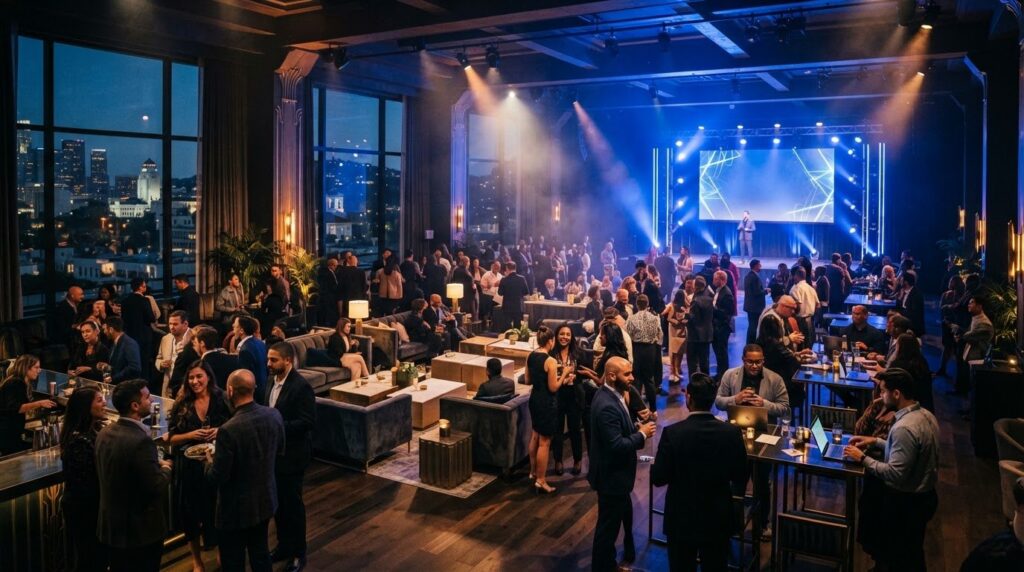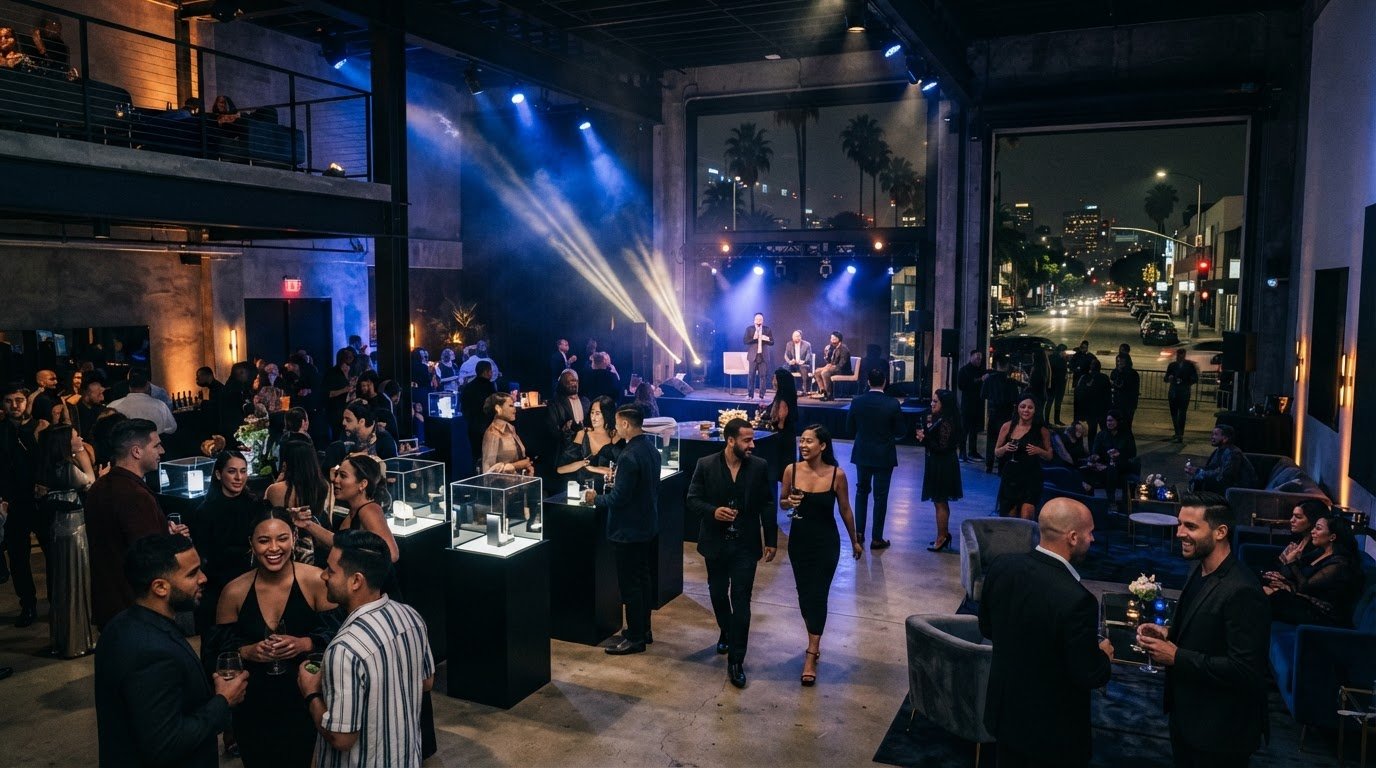
The best brand activation venue rental in Los Angeles isn’t simply the biggest room; it’s a flexible space that turns arrival, demonstrations, conversation, and photography into distinct moments. For a focused, high-touch experience, an intimate format of 50 to 150 guests can encourage personal connection, while larger concepts call for layouts that support guest flow, displays, and production.
Location and atmosphere matter as much as square footage: a creative neighborhood setting can shape discovery, while a polished event space can bring a product launch into focus. You’ll learn how Los Angeles spaces differ, what rental minimums and per-guest costs depend on, and how to match a layout to your activation goals. We’ll also look at practical planning considerations, from guest journey to technical needs, so you can compare spaces with a clearer sense of what will make the experience work.
Key Takeaways
- Compare indoor and outdoor spaces by the experience they enable, from product demonstrations to open-air discovery.
- Assess neighborhood character and audience relevance alongside venue style; high foot traffic alone may not mean the right fit.
- Understand how rental minimums and per-guest estimates shift with event scope, setup needs, and the time required in the space.
- Plan a flexible guest journey with clear activity zones, then consider whether a versatile Los Angeles event venue fits your activation format.
Which Los Angeles venues offer pop-up or experiential marketing spaces?
Los Angeles offers indoor, outdoor, and hybrid settings for brand activations, from focused product experiences to large installations. Choose a venue around the experience you want guests to have, not square footage alone.
Indoor and Outdoor Event Options
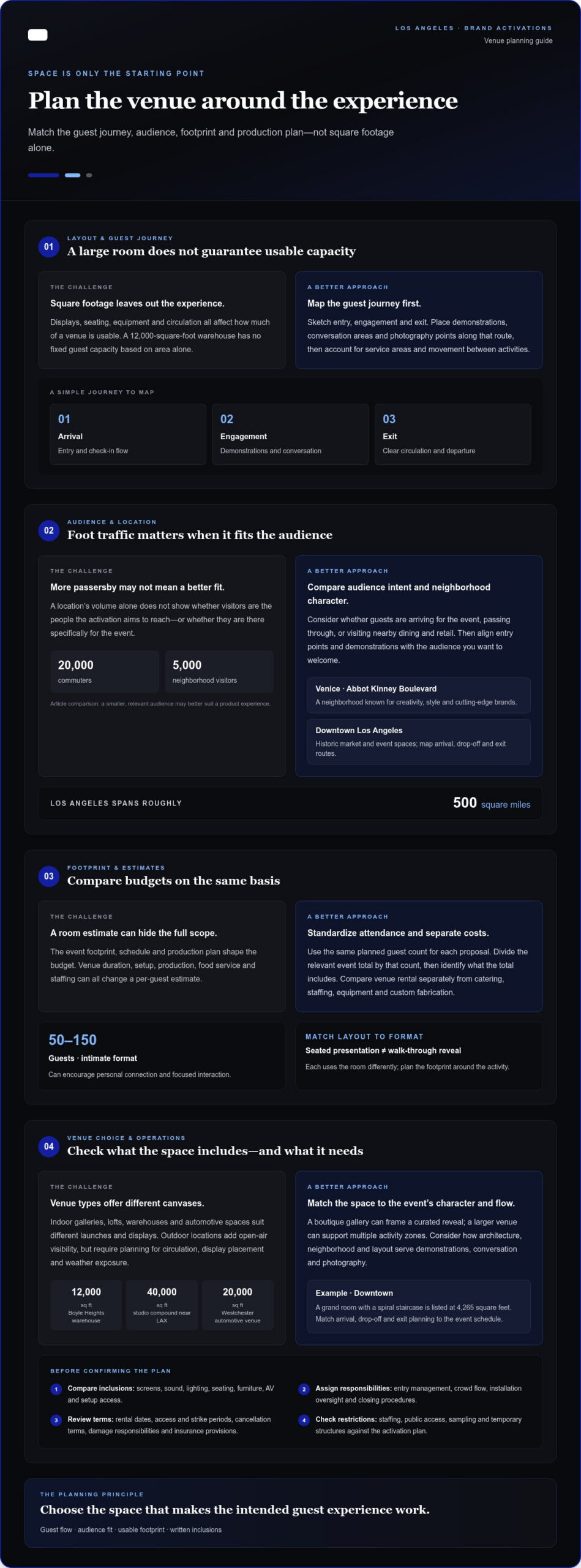
Indoor galleries, event lofts, warehouses, and automotive spaces provide distinct canvases for launches and interactive displays. A Boyle Heights warehouse spans 12,000 square feet, while a studio compound near LAX offers 40,000 square feet. A Westchester automotive venue is listed at 20,000 square feet. Outdoor locations add open-air visibility, but plans should account for guest circulation, display placement, and weather exposure. On Abbot Kinney Boulevard in Venice, The Cart Collective served paletas for J.Crew and Madewell, showing how a compact food installation can meet a neighborhood audience.
Corporate Events and Product Launches
For a corporate event or product launch, match the room’s layout to demonstrations, conversation, and photography. A boutique gallery can frame a curated reveal, while a large venue can support multiple activity zones. Historic architecture, a Hollywood setting, a rooftop, or a district known for creative brands can shape the event’s character. For large-scale events, consider Magic Box as a venue option and assess how its space supports the intended installation and audience flow.
AV, lighting, furniture, and production may be included, available as add-ons, or arranged separately. Compare the written inclusions against your run of show, especially screens, sound, lighting, seating, and setup access.
Insurance, security, and staffing needs depend on the activities, public access, equipment, and expected guest movement. Include clear responsibilities for entry management, crowd flow, installation oversight, and closing procedures in the event plan.
Before booking, review the rental dates, access and strike periods, equipment, cancellation terms, damage responsibilities, insurance provisions, staffing roles, and restrictions on sampling or temporary structures. Check each detail against the activation plan, including food service such as paletas, gelato, or churros.
Los Angeles venue types and locations
Los Angeles spans roughly 500 square miles, so neighborhood and audience fit matter alongside venue style. Compare the setting, guest journey, and access conditions before choosing a location for creative or corporate events.
Downtown Location and Accessibility
Downtown Los Angeles offers indoor event rooms, dining destinations, and distinctive architecture. A grand room with a spiral staircase is listed at 4,265 square feet, while Grand Central Market has welcomed visitors since 1917. For a Downtown launch, map arrival, drop-off, and exit routes around the event schedule. Traffic changes the journey: a trip taking 20 minutes at 11 a.m. can take an hour at 5 p.m.
Audience Access and Venue Location
Foot traffic is useful only when it aligns with the people an activation aims to reach. One Los Angeles comparison contrasts 20,000 commuters with 5,000 neighborhood visitors, illustrating how a smaller, relevant audience may better suit a product experience. Consider whether guests are arriving specifically for the event, passing through, or visiting nearby dining and retail destinations. Then position demonstrations and entry points to welcome that audience.
Venue Neighborhood Options
Neighborhood character can set the tone before guests enter. Abbot Kinney Boulevard in Venice is known as a hub for creativity, style, and cutting-edge brands, making its context distinct from Downtown’s historic market and event spaces. Compare a restaurant or indoor venue with surrounding activity, guest intent, and the brand’s visual identity. For a corporate event setting, explore a Los Angeles venue option as part of your location comparison.
Venue rental minimums and per-guest estimates
The event’s footprint, schedule, and production plan shape its budget. Compare venue rental separately from catering, staffing, equipment, and custom fabrication so a room estimate does not obscure the full scope. For a brand activation venue rental in Los Angeles, define the experience and its practical needs before comparing options.
An intimate format of 50 to 150 guests can encourage personal connection and focused interaction. Start with the guest journey: map entry, engagement, and exit, then place demonstrations, conversation areas, and photography points along that route. The resulting layout shows how much event space the experience needs. A seated presentation, for example, uses the room differently from a walk-through product reveal.
Square footage alone doesn’t establish usable capacity. A 12,000-square-foot Boyle Heights warehouse has no fixed guest capacity based on area alone; seating, displays, equipment, and circulation affect the usable count. Sketch the footprint before comparing venue minimums. Include service areas and movement between activities, so the plan reflects the activation rather than an empty-room measurement.
Per-guest estimates are most useful when each proposal uses the same attendance assumption. Divide the relevant event total by the planned guest count, then identify what that total includes. Venue duration, setup needs, production elements, food service, and staffing can change the comparison. The price depends on the event’s scope and is provided after a quote request, with costs shaped by its schedule, layout, and production requirements.
Travel and arrival planning also shape the schedule. For guests coming from Santa Monica, consider arrival windows, parking or drop-off flow, and how entry queues may affect the first interaction. Match check-in staffing and activation timing to the anticipated arrival pattern. A carefully planned arrival gives guests room to engage rather than placing the reveal behind a bottleneck.
Brandable and flexible spaces
A distinctive venue can become part of the brand experience when its architecture, layout, and visual details support the activation concept. Start with the central message, then decide what guests should notice first. A product reveal might need a clear focal point, while an interactive demonstration needs space for participation and movement.
A flexible floor plan can support distinct moments without making every area look the same. Divide the space into arrival, discovery, engagement, and exit zones, and give each a clear purpose. For example, a photo moment near the entrance can establish the visual identity, while a demonstration farther inside invites longer participation. Keep paths between these experiences clear.
Technology should reinforce the concept rather than compete with it. Plan where screens, cameras, and interactive displays meet audience movement, and consider 4K streaming and digital interactions as baseline technical requirements. A screen positioned across a guest route can interrupt flow; placing it beside a demonstration can support the story and keep the space functional.
- Arrival: Use branded signage to make the entry point recognizable.
- Engagement: Give product interactions a defined footprint.
- Photography: Position a visual backdrop where guests can pause without blocking circulation.
- Exit: End with a clear final message or action.
Build time affects how much customization a space can accommodate. Most activation programs book one to three prep days for the build, followed by a strike day. Use that schedule to sequence installation, lighting focus, display testing, and final brand-detail checks before guests arrive.
For a space that can support a distinctive activation concept, explore a flexible event setting and consider how its layout could carry your brand story.
The Vermont Hollywood: Concert Tickets
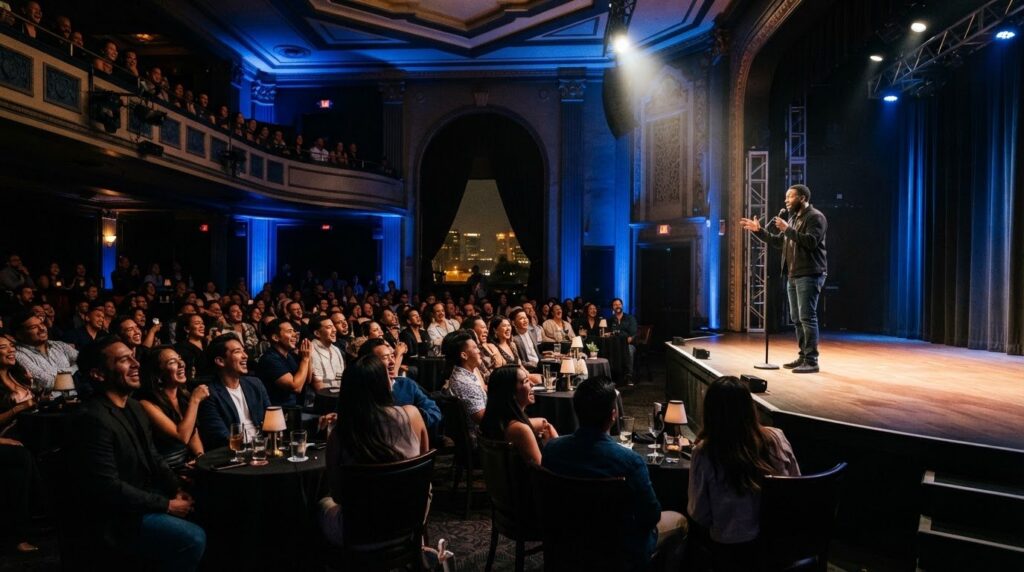
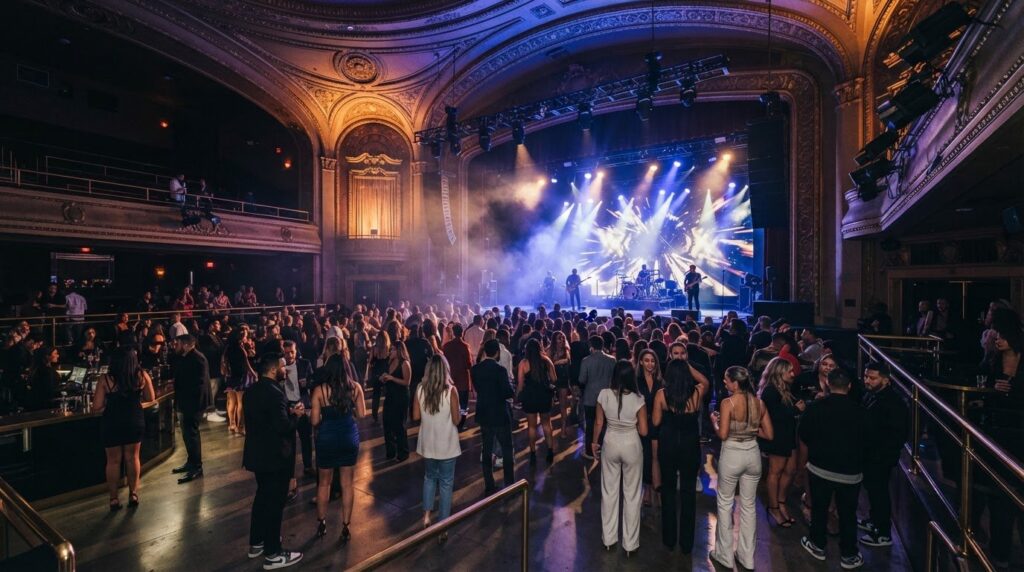
The Vermont Hollywood gives Los Angeles planners a venue option to consider when an activation calls for an event setting, while its concert and comedy listings serve guests seeking live entertainment. For a company gathering or launch-related event, its corporate event venue rental may fit; film and television teams can also explore its location rental for production. Choose the format that matches your purpose, whether you’re planning a corporate gathering, producing a shoot, or looking for an upcoming performance.
When discussing your event, bring the concept, guest journey, and production needs. These details help you plan how the space can support the occasion, from arrival through the main experience. Contact The Vermont Hollywood to discuss a brand activation or arrange a venue tour.
Shape the Next Step Into a Clear Brief
Turn the activation concept into a concise decision brief: define the feeling guests should leave with, the moments that carry the message, and the practical priorities guiding your venue choice. With those decisions in place, choosing a brand activation venue rental in Los Angeles becomes a focused discussion about how the space can serve the experience, not just how it looks.
The Vermont Hollywood offers corporate event and brand activation venue rental in Hollywood, Los Angeles. It also sells concert and comedy show tickets, serving event planners and guests seeking live entertainment for different purposes.
Bring your event vision into the next conversation and explore whether the venue suits your plans. Contact The Vermont Hollywood to take the next step, and move your concept toward an experience guests will remember.
Frequently Asked Questions
What makes a venue right for a brand activation?
A suitable venue supports both the brand objective and the way guests encounter it. Consider whether the space can accommodate the essential experience, such as a product demonstration, hands-on trial, or media moment. Then assess how the venue’s existing character supports the visual concept. A useful test: can guests understand the activation’s central idea without being guided through every detail?
How much does it cost to rent an event space in Los Angeles?
Plan the event budget by separating venue rental from production, food service, and custom installations. Also account for the date, rental duration, setup and strike time, room configuration, equipment, and staffing. That breakdown helps you compare proposals against the event’s actual scope.
How much time does an activation build need?
Most brand activation programs book one to three prep days for the build, followed by a strike day. Use the prep schedule to assign time for installation, technical tests, brand-detail review, and a full guest-journey walkthrough. For example, test interactive displays before the final walkthrough, leaving time to resolve placement or flow issues before opening.
What venue rules apply to signage, sampling, filming, and live events in LA?
Rules depend on the activity and venue agreement. Include public access, product sampling, signage, filming, and temporary structures in the event plan, since planned activities can affect permit requirements. For a Temporary Special Event in Los Angeles, the application must be filed at least two business days in advance, and the application fee is $137.80. Venue contracts also set site-specific conditions.
What are the best venues in Los Angeles for brand activations and pop-up events?
The best fit depends on the activation format, audience, and production footprint. A gallery can suit a tightly curated reveal, while a larger event space may accommodate multiple experiences. The Vermont Hollywood is one Los Angeles option to consider for a brand activation. Compare each candidate against your concept’s practical needs, including setup access, guest flow, display placement, and the intended atmosphere.
How much does it cost to rent a brand activation venue in Los Angeles?
For a brand activation venue rental in Los Angeles, plan for more than the room itself. Account separately for venue rental, production, installation, staffing, catering, and setup and strike needs. Guest count and layout can affect several of these categories. Contact The Vermont Hollywood to discuss your event requirements and arrange a tour.