Capturing the cinematic soul of the 1920s requires more than just a vintage facade; it demands a location that does not collapse under the weight of a modern 4K production rig. For the visionary director, the search for authentic Art Deco filming locations Los Angeles often feels like a precarious choice between visual perfection and operational disaster. You have likely scouted breathtaking ballrooms only to find they lack the essential power grid for high-end lighting or possess a sterile, over-renovated sheen that erases decades of authentic 1930s character. We understand that a truly world-class production requires a frictionless environment where the craftsmanship of the past is supported by the technological resilience of the future. This guide identifies the most iconic landmarks that have successfully balanced their historic architectural integrity with the 2026-ready infrastructure necessary for high-end talent and crew. We will explore how to navigate the complexities of landmark permitting, utilize new low-impact permit programs, and highlight spaces like The Vermont Hollywood that offer the perfect blend of period-correct patina and modern fiber connectivity.
Key Takeaways
- Master the aesthetic language of the Golden Age to evoke themes of luxury and power through specific Art Deco architectural signatures found in DTLA.
- Identify the most prestigious Art Deco filming locations Los Angeles has to offer while ensuring they possess the 2026-standard power infrastructure required for advanced production.
- Navigate the logistical complexities of landmark permitting and utilize the latest city-wide low-impact programs to secure iconic backdrops with minimal bureaucratic friction.
- Discover how The Vermont Hollywood integrates world-class cinematography technology within a meticulously preserved historic cinema to provide a frictionless production environment.
The Enduring Allure of Art Deco Filming Locations in Los Angeles
Art Deco is the visual shorthand for the Golden Age of Hollywood, a period where architectural ambition mirrored the soaring growth of the silver screen itself. For filmmakers, these spaces represent more than mere backdrops; they are sophisticated characters that articulate themes of unchecked luxury, corporate power, and the brooding shadows of futuristic noir. The aesthetic is defined by its unapologetic commitment to symmetry and opulent materials, creating a sense of permanence that resonates with modern audiences through a unique blend of nostalgia and visionary design. When scouting Art Deco filming locations Los Angeles, directors often seek that specific 1930s patina that suggests a world of high-stakes drama and architectural grandeur. It is a style that feels both ancient in its geometric rigidity and startlingly modern in its sleek execution.
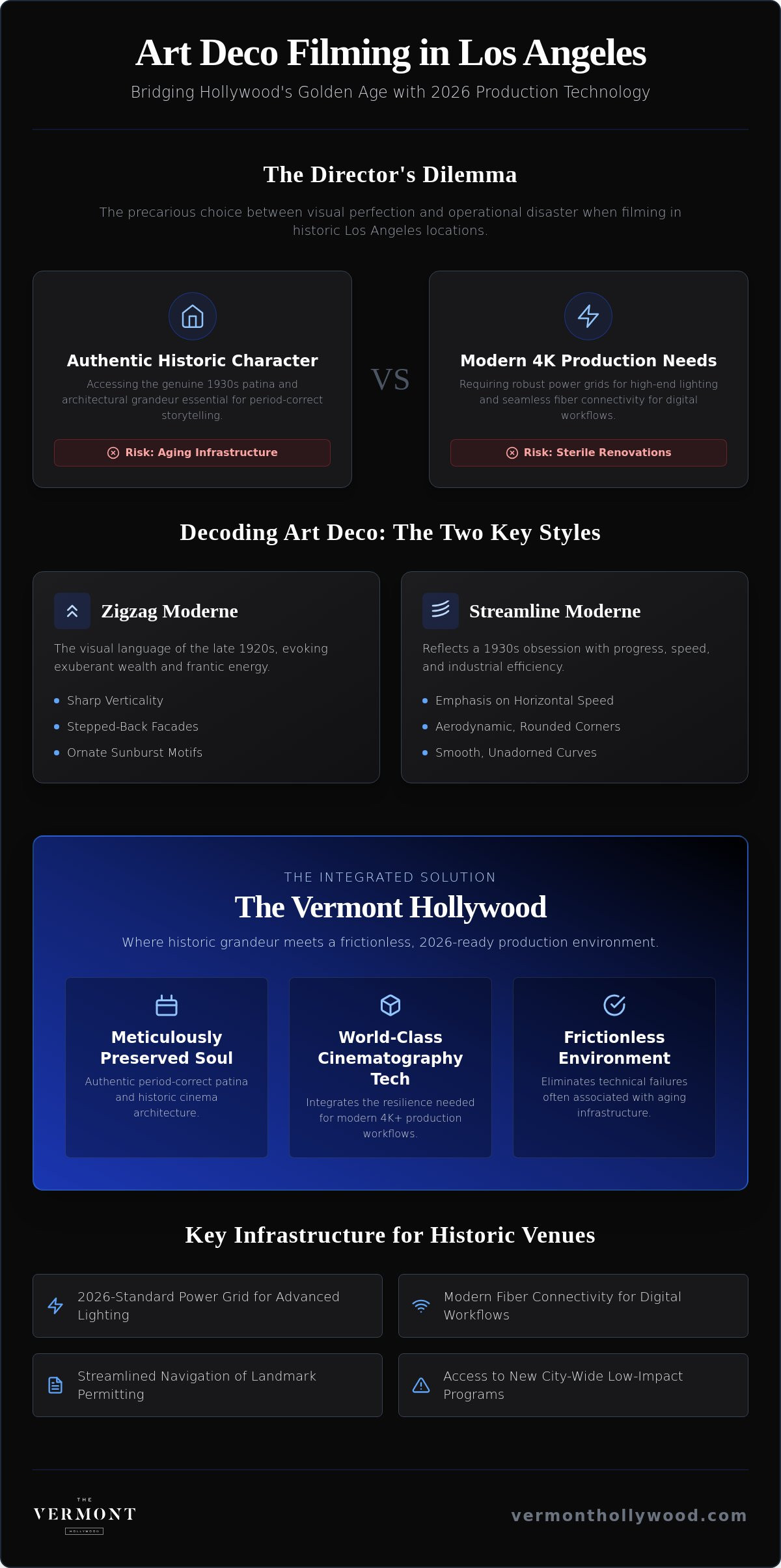
A discerning eye must distinguish between the two primary movements within the style to ensure thematic consistency across a production. Zigzag Moderne, characterized by its sharp verticality, stepped-back facades, and ornate sunburst motifs, evokes the frantic energy and exuberant wealth of the late 1920s. In contrast, Streamline Moderne emphasizes horizontal speed, rounded corners, and aerodynamic curves, reflecting a 1930s obsession with progress and industrial efficiency. This distinction is critical for production designers who need to ground their narratives in a specific emotional frequency. You can consult a comprehensive List of California Art Deco buildings to appreciate how these styles permeate the city’s skyline, providing an endless array of visual possibilities for high-end cinematography.
The Evolution from Cinema to Cinematography
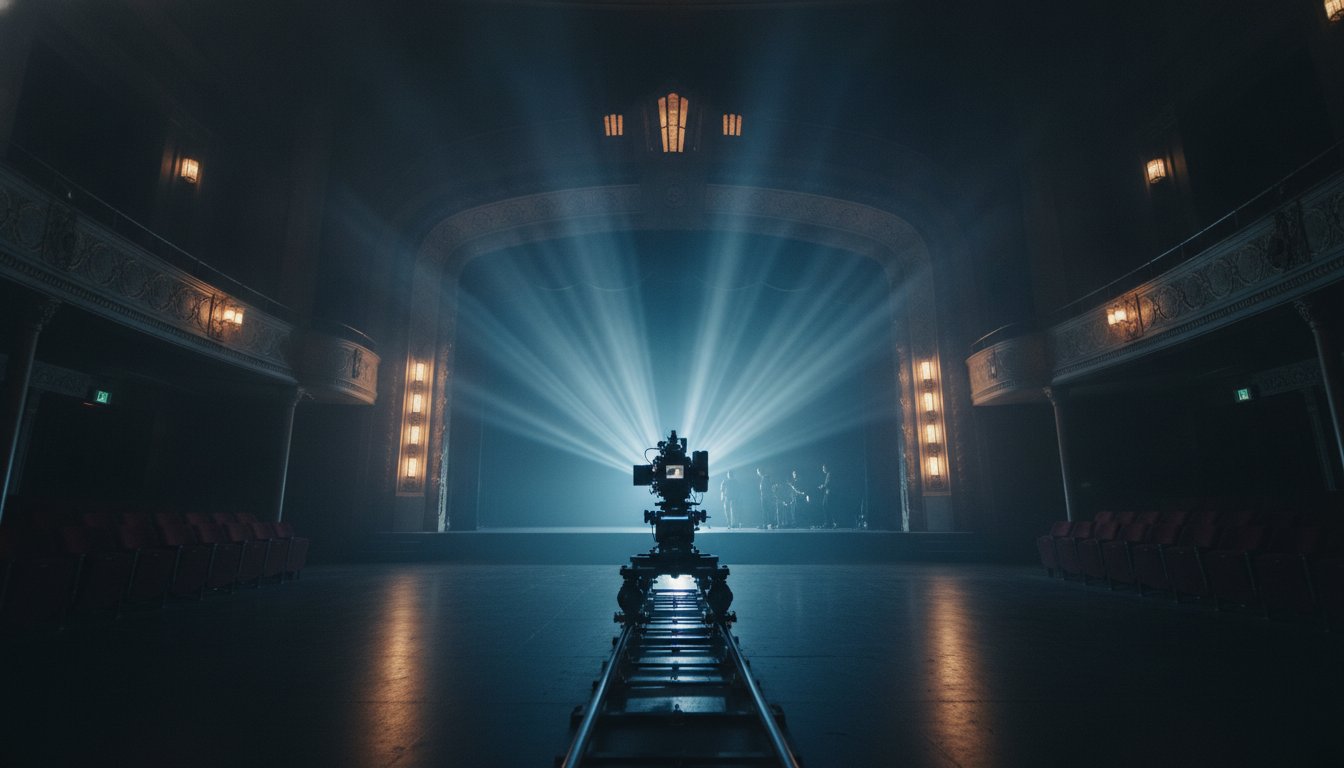
Los Angeles became the global epicenter for this movement during the 1930s building boom, a time when the city was rapidly defining its identity as the world’s dream factory. Historic theaters served as the primary canvas for this architectural revolution, functioning as opulent palaces that invited audiences into a frictionless experience of luxury and escapism. These venues weren’t just places to watch films; they were the very laboratories where the visual language of modern film & TV shoot location rental was born. Today, the most successful productions utilize sites that preserve this historic cinema soul while integrating the technical resilience required for 2026-standard production workflows. This marriage of heritage and innovation ensures that the visionary expert can capture the grandeur of the past without the technical failures often associated with aging infrastructure.
Iconic LA Landmarks: A Curated Roundup of Art Deco Masterpieces
The landscape of Art Deco filming locations Los Angeles offers a curated portfolio of architectural masterpieces that serve as high-status backdrops for premier productions. The Eastern Columbia Building, often hailed as the “turquoise jewel” of Downtown, remains a definitive choice for high-fashion exteriors due to its vibrant terra cotta tiles and soaring sunburst clock tower. For directors pursuing a neo-noir aesthetic, Union Station provides an iconic Streamline Moderne gateway, its expansive waiting rooms and intricate wood-beam ceilings offering a sense of cinematic grandeur that has anchored countless narratives. Meanwhile, the Bullocks Wilshire Building stands as a quintessential monument to cathedral-like retail luxury, its copper-clad spire and opulent interiors representing the pinnacle of 1920s sophistication. Hollywood’s historic theaters remain the first stop for discerning location scouts, as these venues offer a concentrated density of period-accurate details that are difficult to replicate on a soundstage. The same venues that captivate production scouts also attract entertainment seekers looking for comedy show tickets in Hollywood’s most atmospheric settings, where the Art Deco grandeur elevates every live performance.
The desire for such authentic architectural experiences often extends to travel; for instance, those who appreciate historical craftsmanship can find premium accommodations in beautifully preserved villas through Halua Hanko.
Securing these sites requires a visionary expert’s approach to the Los Angeles Historic Preservation Program, where the meticulous attention to detail in the architecture is matched by the complexity of modern permitting. These landmarks represent the heritage of the industry, yet they often carry a technical debt that can hinder high-output lighting or digital connectivity. For those who value a frictionless experience without sacrificing the 1930s patina, exploring a professional film & TV shoot location rental in Hollywood can provide the necessary infrastructure for modern 4K cinematography. This ensures that the visual impact of your production is never compromised by the logistical limitations of an unrenovated space.
Downtown vs. Hollywood: Choosing Your Backdrop
While searching for Art Deco filming locations Los Angeles, the choice between Downtown and Hollywood is often dictated by the desired scale and lighting profile of the production. Downtown’s verticality creates dramatic shadows and a sense of corporate power, while Hollywood’s theaters provide a warm, glamorous intimacy. Hollywood’s primary advantage lies in its geographical synergy with the city’s production ecosystem, offering immediate access to equipment houses and talent agencies. This proximity reduces logistical friction, allowing the director to focus on the craftsmanship of the shot rather than the minutiae of transport.
Technical Considerations for Production in Historic Art Deco Spaces
The visual allure of a 1930s facade is undeniable, yet the visionary director must confront the hidden reality of “technical debt” that often plagues unrenovated landmarks. Many Art Deco filming locations Los Angeles offers are preserved as architectural monuments, but their internal systems frequently remain relics of a bygone era. This creates a significant challenge for modern crews who require the massive electrical throughput necessary to drive 2026-standard LED walls and high-output lighting arrays. Attempting to draw modern power levels from 1920s wiring isn’t just inefficient; it’s a liability that can halt a production day. Producers must account for the cost of external generators and complex cable runs when analyzing production location fees to avoid unforeseen budgetary inflation.
Acoustic integrity presents another hurdle in these historic spaces. The signature marble floors, towering plaster ceilings, and hard geometric surfaces that define the Art Deco aesthetic are notoriously hostile to clean audio capture. Without professional acoustic treatment, these lobbies become echo chambers that complicate dialogue recording and require extensive post-production cleanup. Achieving a frictionless audio environment requires a space that respects its heritage while aggressively pursuing a forward-looking identity through modern sound dampening and isolated power circuits. To avoid these technical failures, savvy producers often choose a film & TV shoot location rental that has been fully modernized for high-end production. The same infrastructure that supports high-stakes cinematography also makes these renovated historic venues ideal when you need to rent a concert venue for private event Los Angeles brand activations that demand both atmospheric grandeur and technical precision.
The Logistics of Load-In and ADA Compliance
Logistical friction often arises from the physical limitations of early 20th-century design. Narrow doorways and the lack of dedicated freight elevators in historic buildings can turn a standard equipment load-in into a multi-hour ordeal. It’s essential to verify that your chosen cinematography location rental provides modern freight access and full ADA compliance to ensure the safety and comfort of high-end talent and crew. A professional environment should offer a versatile floor plan that accommodates heavy equipment without compromising the integrity of the historic architecture.
The Vermont Hollywood: Where Historic Grandeur Meets Modern Production Tech
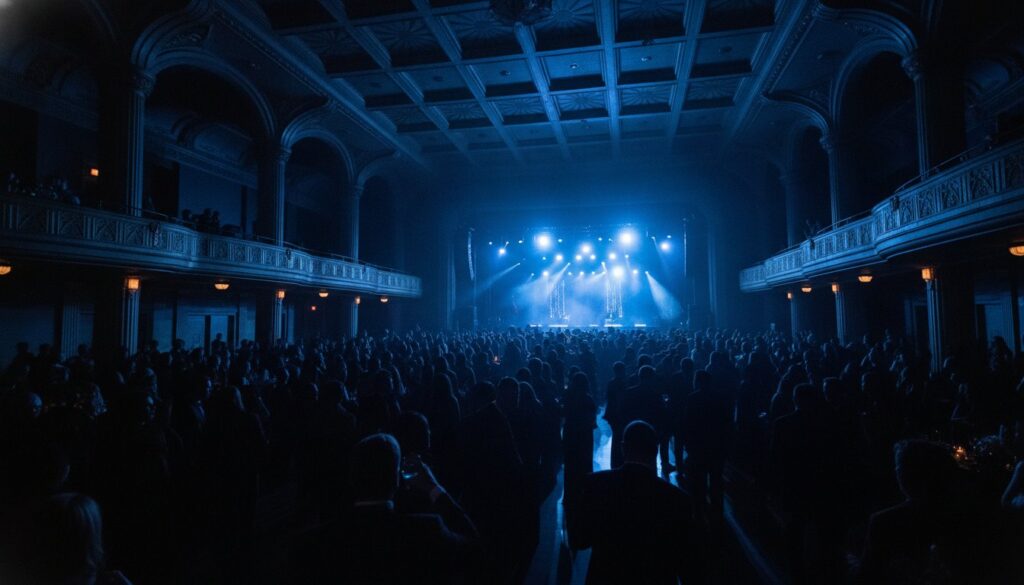
The Vermont Hollywood represents the ultimate evolution in the search for Art Deco filming locations Los Angeles, providing a meticulously restored environment that avoids the technical debt often found in unrenovated sites. Following an exhaustive $20 million renovation, this 13,000 square foot venue stands as a premier destination for those seeking a film & TV shoot location rental that honors its historic cinema heritage while aggressively implementing 2026-standard production resilience. It’s a space where the craftsmanship of the past meets a forward-looking digital infrastructure, ensuring that every frame captured reflects a sense of luxury and technological superiority. This venue is the professional choice for scouts who need the atmospheric weight of the 1930s supported by a power grid capable of driving high-output LED arrays without hesitation.
The venue’s versatile floor plan is specifically designed to accommodate the complex logistics of large-scale brand activations or multifaceted film sets, offering a level of flexibility that is rare among historic landmarks. By choosing The Vermont Hollywood, directors can capture the atmospheric weight of a traditional historic theater rental without the operational friction of outdated wiring or restrictive load-in paths. This commitment to a frictionless experience ensures that the visual impact of the production is never compromised by the limitations of the physical space, allowing the creative vision to remain the primary focus.
Unrivaled Infrastructure for 2026 Productions
What truly elevates this venue is the integration of state-of-the-art sound and lighting systems that were installed during the comprehensive renovation, effectively eliminating the need for the massive external equipment rentals that typically bloat production budgets. Owned and operated by MCAP Partners, the space is managed with the meticulous attention to detail that high-end talent and media production companies expect from a world-class host. The proprietary digital security and advanced HVAC systems ensure that the production environment remains secure and comfortable, allowing the crew to focus entirely on the artistry of the shot. It’s an expert curation of space and technology that defines the next generation of live production in one of the most iconic Art Deco filming locations Los Angeles has preserved for the modern era.
Secure Your Legacy in the Golden Age of Production
Choosing between the historic grandeur of the 1930s and the rigorous technical demands of a modern set no longer requires a compromise in quality. A visionary director recognizes that the most successful Art Deco filming locations Los Angeles offers are those that bridge the gap between architectural heritage and 2026-ready resilience. By prioritizing spaces that have addressed their technical debt through meticulous modernization, you ensure that your production captures the authentic patina of the past without the risk of infrastructure failure. It’s about selecting a character for your film that possesses both the aesthetic weight of the Golden Age and the electrical throughput of the future.
The Vermont Hollywood stands as the definitive choice for media companies who demand a frictionless environment within a meticulously preserved 13,000 square foot professional production space. With state-of-the-art sound and lighting infrastructure integrated directly into its historic cinema charm, this venue provides the technological superiority required for high-stakes cinematography. Don’t let the logistical limitations of an unrenovated landmark stifle your creative ambition or delay your production schedule. We invite you to book your next production at The Vermont Hollywood and experience a venue where craftsmanship and innovation exist in perfect harmony. Your masterpiece deserves a backdrop that is as resilient as it is iconic.
Production Intelligence: Frequently Asked Questions
What are the most famous Art Deco buildings in Los Angeles for filming?
Beyond the DTLA core, the most iconic Art Deco filming locations Los Angeles offers include the Griffith Observatory and Los Angeles City Hall. These sites provide a sense of architectural permanence and historical weight that’s impossible to replicate on a soundstage. While the Observatory offers a world-renowned silhouette for science fiction and romantic narratives, City Hall serves as a versatile backdrop for productions requiring a sense of civic authority and geometric rigidity.
How much are production location fees for historic sites in LA?
Daily licensing fees for premier historic landmarks vary significantly based on the venue’s prestige and the production’s footprint. For instance, filming at the Griffith Observatory currently requires a $30,000 fee, while Union Station offers the Fred Harvey Room for a daily license fee of $16,000. It’s important to note that many city-owned facilities provide the location itself at no charge, though producers must still account for personnel costs and standard municipal permitting requirements.
Can modern film crews use original 1920s power systems?
Original 1920s electrical systems are fundamentally incapable of supporting the high-output lighting and digital infrastructure required by modern cinematography. Most unrenovated historic sites possess a significant technical debt, necessitating the use of external generators and complex cable management systems. To ensure a frictionless production, visionary directors often prioritize venues that have undergone a comprehensive technological renovation to provide 2026-standard power resilience and fiber connectivity.
What is the difference between Art Deco and Streamline Moderne for production design?
Art Deco, specifically the Zigzag Moderne variant, emphasizes verticality and intricate ornamentation to evoke an atmosphere of opulent wealth and corporate power. In contrast, Streamline Moderne focuses on horizontal lines and aerodynamic curves that suggest speed and industrial progress. Discerning production designers utilize these distinctions to ground their stories; Zigzag conveys the frantic energy of the late 1920s, while Streamline reflects the forward-looking optimism and efficiency of the 1930s.
Do I need special permits to film in a landmarked Art Deco building?
Filming in a landmarked building requires a standard permit application through FilmLA, which currently carries a $931 fee for up to five locations. However, as of April 2026, the Low Impact Permit Pilot Program offers a reduced fee of $350 for smaller productions with 30 or fewer cast and crew. You must also maintain a minimum liability insurance coverage of $1,000,000 to satisfy municipal safety regulations for motion picture production in the Art Deco filming locations Los Angeles maintains.